Showing posts with label feed. Show all posts

Monday, October 9, 2017

Tonight's menu at the pig table

Tonight for our produce fed pigs, we have the following:

Fresh vine ripened whole pumpkins served on a bed of pumpkin vines with roots. For a savory side dish, a collection of whole kohlrabi. (They had watermelon as an appetizer!)


posted from Bloggeroid

Saturday, August 5, 2017

Best watermelon of 2017

What is better on these hot summer days than a cold juicy vine ripened watermelon?
Our melon patch is doing really good this year, in fact it seems the healthiest part of the animal garden! If all goes well, those lucky pigs will be enjoying a steady diet of heirloom vine ripened melons soon!

But we had to try one!


Hunter picked it out himself, and he made a great choice! This melon was the sweetest, the juciest, the best tasting melon ever!


If there are extras, we will offer a few of these for sale soon through the normal home delivery ordering. Keep watching for it!

posted from Bloggeroid

Tuesday, June 20, 2017

Tonight's menu...

Here is a look at tonight's menu at the farm...

For starters we have a selection of fresh baby greens, a variety of green plants and weeds from the garden. Succulent, just picked with roots and all.

Then we move on to the main course... Our own mix of soaked, sprouted, and fermented grains. Not one grain... but multi grains. And when we say sprouted... We mean really sprouted with 1 inch tails!

Then to finish, a dessert of another batch of greens (weeds).

These guys eat well!


posted from Bloggeroid

Saturday, June 10, 2017

Watermelons in the ground!

Early this week we planted the watermelons. Three different types this year, red, white and yellow.

Here is a pic of the kids setting the drip lines to sprout the seeds.


This watermelon patch is exactly twice as big as last year. This will provide even more delicious melons to finish the hogs on for the incredible pork flavor only at Little Sprouts!

As of this weekend, the sprouts are mostly up already and looking healthy!

Fava Beans looking good!

The fava beans are growing wonderfully!


They are actually covered in beautiful white flowers now, and lots of tiny beans.

And oooo.. all that goat feed! (weeds) in between the rows. We are harvesting a load per day of beautiful organic goat feed from in between the beans. Some of the weeds are too small to harvest efficiently, but they are growing!

Sunday, April 23, 2017

Quick Update on things for April

Sorry, no pictures on this post. Quite honestly... we have been a bit too busy to keep up with reporting on things.  So here is a quick update:

1. The fave beans are sprouted, reasonably well. Not as good as hoped, but not bad. The week of warmer rains might bring a few more to the surface... hopefully.

2. We did manage to get the entire main garden tilled this week, just in time for the rain. As always, the plan is to till as soon as dry enough, then let it sit through a warm rain (at least not cold) to sprout initial weed set, then a light till when it dries again and plant.  We have the first tilling done, now waiting for the rain, sprouting, retilling and planting. For the curious, the main garden this year is right at 1 1/2 acres in size.

3. We have 2 more areas hoping to get planted before summer, the old goat pen and the present pig pen. Those two are well fertilized and ready to go. But, the goat pen is much too muddy yet and the pig pen is.. well.. housing pigs yet! Plus the pigs totally tore down one side of fencing, held up by a pallet, so that must be replaced.

4. There are 2 more potential areas to plant this year... one has been housing horses for several years, and the other is the original winter garden spot. both should grow well.

5. The goats are almost all into milk now, ready for the season.  It has meant some serious restructuring of the barn to accommodate the bulk of the herd all at once, but it is slowly coming together.

6. We did manage to get the milking barn rebuilt, cleaned up from the winter, and useable again.

7. The new chicken flock is doing well, we ended up with right at 150 young birds that look healthy and happy. They will be coming out of the brooders this week and into their first job of fertilizing one garden area.

8. The new guinea fowl arrive this week, which means we will be retiring the old flocks to start anew, providing some excellent meat and organs for sale.

9. We have tested last year's home made "feed" of dehydrated zuchinni and greens. It stored exceptionally well! opening the buckets after 6 months revealed perfectly dry, aromatic, well preserved vegetables! The chickens were the first recipients of this marvelous free feed and they love it as long as it is ground a bit into smaller chunks. And their eggs... WHOA! the best eggs we have ever produced! Thick orange yolks, well developed whites, perfect aroma and a beautiful soft flavor. These are , in my humble opinion, the best eggs I have ever seen! And that is without the bug barn in operation, just zuchinni and greens! It looks like the experiment is a smashing success!

10. This week with the rains we hope to spend time finishing the barn insides and getting the chickens moved into their spring positions. Then it's office work! We have lots of paperwork to do to support the new may announcements!

I think that's about it for now. Please forgive us for not keeping up with emails this week, the pleasant weather break meant some long days, and enough hours in the sun to build a nice sunburn! The rains means that things will settle a bit and we can get back on top of things.

Thanks for all your support!

Thursday, April 6, 2017

Spring is here! Fava Beans in the Ground!

Spring has finally arrived and we are busy getting seed into the ground for this year's animal feed harvests.  Yes it is a tad early, but some plants are fine germinating in the cooler weather. This includes the new trial crop for 2017, FAVA BEANS!

The beans are a good 1/2 to 3/4 inch across, sometimes as much as an inch! That is the largest bean I have ever seen!

Here is a pile of beans spilled out on the grass


We are trying heriloom fava beans to use as animal feed. They are very starchy beans that grow in HUGE pods with HUGE beans! The nutritional stats look good, and the weather profile looks acceptable for an early spring planting.

So this week we planted 6 rows of 60 yards each in fava beans. There are no drip lines yet,  which is unique for our system. But the weather should see some nice bouts of rain yet, enough to sprout these seeds, so we literally just tilled up the driest spot available and put seeds in. If the rain doesn't materialize over the weekend, then we will install drip lines.


These beans are too large to fit any of the hand push automatic seeders, so we needed another way to avoid the planting backache. The answer? a 3/4 inch PVC pipe! I held the pipe at one end, placed the bottom where I wanted the seed, and dropped one down. It would land in a small impression, and Hunter would come along to bury and compress them. This was quite efficient! Occasionally the beans would not fit, but not too often. Usually they slid right down with a song and a thud.

Our homemade fava bean planter. Just a piece of 3/4 inch pipe. Drop one at the top as you walk down the row and it is easy to space them out without bending over. 

Then just follow along and bury each one by hand.
We managed to turn a 60 yard by 120 yard patch of pasture into a garden, with 6 60 yard rows of fava beans planted, all in one day. We just finished as the sun set.

Wednesday, March 15, 2017

New Product! Healthy Hen Supplement!

This month we are releasing another new product, this time for chickens!

Here is a pic of the new mix. You can see the DE covering most of the grain and grubs giving this a frosty white appearance. 


Healthy Hen Supplement!
This supplement has everything in it that chickens need, but it often missing from their feed.... even the best feeds! Anyone can use this supplement to provide better health, but it is especially important for confined hens and hens fed inexpensive soy based feeds.

Turn "cheap feed" into a reasonably healthy diet by adding this supplement to the normal chicken feed once or twice a week. Watch the egg quality to see how often your hens need another boost. The difference should be evident in the eggs within a day or two of feeding!

A closeup to show the individual ingredients! 

Here is the list of ingredients:


  • 3 grain scratch
  • Organically fed Black Soldier Fly Larva
  • Healthy Chicken Herb Mix
  • Oyster Shell
  • Chicken Grit
  • Food Grade Diatamecous Earth

A Run Down of the Ingredients and Benefits

3 grain scratch Organic Wheat, Barley and Oats:
These organic non-gmo grains serve as a base to hold the DE and to create enough volume so that the first chickens do not consume all of the treats restricting the intake of others.

Organically fed Black Soldier Fly Larva:
The chicken's natural source of protein, bugs! These bugs are grown on organic food scraps in the pacific northwest and freeze dried. They make the best source of fat and protein we have ever found! Just a few of these in the chickens diet will improve health and make deeper colored, richer eggs!

Healthy Chicken Herb Mix:
this is a unique mix of organic dried herbs that provide a foundation of health for chickens.  The herbs in this mix are the ones used to treat problems, included at a level that is preventative of those same problems!

Oyster Shell:
Extra calcium is necessary for chickens to create good hard thick egg shells. Most layer feeds have just barely enough calcium for actively laying chickens. Adding a bit more usually improves the egg shells dramatically.

Chicken Grit:
Grit is tiny hard rocks that act as a chicken's teeth, grinding the food within their stomach for better digestion. Without grit, a chicken can not digest food properly at all. Chickens that are contained to a pen will often pick the ground clean in their pin early on, leaving them at a loss for grit as they age.

Food Grade Diatamecous Earth:
 DE is used to treat a variety of health conditions including parasites. Just a little DE every so often will provide a layer of protection and health to keep problems from developing.

You can order this feed supplement in the online store with your regular order.  It comes in 1.5 lb and 4.5 lb bag. The 1.5lb bag will feed about a dozen chickens once, 6 chickens twice. Adjust proportionally for the 4.5 lb bag. We recommend starting by adding this to their feed once a week, and see if you can tell a difference in the eggs. If the egg quality goes visibly up and down (color and consistency of yolk, whites, and thickness of shells), then feed more often. Every set of chickens and feed is slightly different, so explore and see what your chickens need.

Tuesday, January 3, 2017

Success!!! Feeding Home Raised Zucchini in the Winter!

It's always a great feeling when something works! This is one of those days... as we sit inside covered in inches of still falling snow... we are able to feed a mix of feed based on zucchini from our own garden!

How you ask? Zucchini is a decidedly summer plant, thriving only in hot weather, surely not growing underneath all that snow!

My reply... have you read the book?  https://www.amazon.com/dp/1520227116   A chapter in this first book touches on growing feed in the summer, dehydrating and storing it, for feeding in the winter.

And the good news is, it works! Today in January we started opening the storage buckets that were filled mid summer, and the feed looks literally perfect!

Click on the picture for a closer look, you can see whole seeds, stalks, roots, leaves, from the fresh plants. the orange color comes from the mature zucchinis. We allowed some to mature to increase the protein content of the seeds. 

This particular recipe looks like a mix of zucchini, dandelion greens, and kale. We ripped up the fruits and plants, roots and all, added some mineral rich salt, and dried the mixture on our special home built drying trays.  After only 4 days in the hot summer sun, the dried flakes are scraped off easily and stored in air tight buckets for the winter.

This 3 gallon bucket of dried feed represents about a quarter of a full RTV bed load (about 4 x 4 x 2 feet) of fresh vegetables and plants.  the compression ratio is immense, which means the storage space required is minimal compared to what the fresh veggies were.

The nutritional content is very high. Unlike feeds based on some "cheap" source of protein like soy (which is NOT a natural feed for any animal) this feed gets its protein mostly from the mature zucchini seeds, which are about 40% protein, plus the protein in the kale plants which makes up about a quarter of this mix.  But besides the protein, this mix contain all the nutrients of zucchinis themselves, plus kale complete with roots and dandelion greens (a super green) and dandelion green roots (highly medicinal). AND these are all heirloom varieties AND grown organically, fertilized with the very animals it is feeding.

From a financial standpoint, this feed is virtually free. It only requires a few seeds, a little water, and some labor to grow, harvest, and dehydrate. The labor is minimal compared to the cash it would take to buy this much high quality feed on the market. That is, IF you can even find such a feed!

So bottom line, it is better nutrition and much lower price than any commercial feed.


Tuesday, December 6, 2016

New Worry - Shy away from conventionally raised pork

There is a constant string of discoveries that point to the need for locally produced pasture raised meats. This one in particular is especially concerning.

It appears that there has been a discovery of a very concerning gene on a medium sized pig farm. The farm has about 1500 sows, that they raise only on farm, no outside genetics or breeding. This particular gene has been found in multiple samples from different sources around the farm.

Why is this so concerning? becasue this gene has the ability to make a variety of bacteria into "superbugs" that are strongly antibiotic resistant. AND, the gene can apparently be transferred to humans where bacteria on the humans can acquire antibiotic resistance.  In other words.. someone could be carrying this gene without knowing it, get a cold or flu or other infection, and discover that the usually easy to deal with bacteria are resistant to all known antibiotics. Not a good situation!


Let me say that it is completely unknown where this "gene" came from or how it got onto the closed ecosystem of this farm. However, as you read through this article, towards the bottom, it makes a clear mention of this:

They made multiple visits last year to the farm, where the sows give birth in tight pens and the piglets are taken to separate pens of 25 each after they are weaned. They found samples of the bla IMP-27 gene in several different samples and in several different species of bacteria, including E. coli and Enterobacteriaceae.
So, this is NOT a pasture based operation where the pigs live outside in the sunshine and fresh air, it is NOT  an organically based operation since the use routine antibiotics on farm. We can "assume" that they are also not using heritage animals with strong immune systems, since those animals are usually raised within the first two criteria of pasture and organic. It is also a pretty safe assumption that these animals are fed commercial soy based "barely good enough" hog feed instead of fresh fruits and vegetables.  Dis any of these issues cause this gene to show up? Its hard to say, BUT we do know that consistent use of antibiotics (as they admit to doing here) causes antibiotic resistance.  I strongly suspect that the combination is what creates a sort of "negative synergy" that gives birth to this and lots of other problems.

The point here is, this is a medium sized operation. It is not technically a "factory farm" or CAFO. And still, the lack of adherence to nature gives rise to these very concerning problems.  It is the practices of conventional breeds, low quality feed, confined spaces that create the need for consistent antibiotic usage and thereby crate these "superbugs".

How do YOU, the consumer avoid this? As we always say.. KNOW YOUR FARMER! Know how he does things... the key points to look for are:


  • Heritage breeds for strong immune systems
  • Pasture living for fresh air and sunshine
  • No confinement births for a naturally cleaned environment
  • Good quality organic feed
  • At least some feed that is fresh, not from a bag with minimal nutrition
  • Completely free of antibiotics, hormones and vaccinations


These form a "minimal accepted standards" for the resulting meat and meat products.

The source of your family's meat is critical... a pretty label or a good flavor or a cheap price are NOT reasons to buy meat. Doing so puts your family into deep health risks, Buy meats only from farms that you KNOW and TRUST and follow at LEAST the above list of criteria.

The full article is here:

http://www.nbcnews.com/health/health-news/researchers-find-rare-superbug-gene-us-pig-farm-n692236

Thursday, October 20, 2016

Crenshaw Harvest has Begun, with a 16 lb Melon?

Finally... the time we have long awaited.. CRENSHAW MELONS! mmmmm, This is truly the Cadillac of melons!

Crenshaws are an heirloom melon, sort of a cross between a honeydew and a canteloup. The flesh is juicy, very sweet, and creamy tasting. Unlike any other melon we have tried.  These beautiful melons form the tail end of our melon harvest for the year.  the recent rains have brought an urgency to get them in from the garden before the wet soils make the melons burst from too much liquid.

This year was .. a bit odd.  The melons for hte most part kept growing instead of ripening. Not sure exactly what mechanism causes these late season melons to ripen, but it was missing! There are a few patches of ripe melons in the field, but most are still green and enlarging. some are HUGE! Our biggest melon so far weighed in at 16 1/2 lbs! Thats larger than many of the watermelons!

Common Question, why do we grow so many melons and sell so few?

Answer: The physiology of pigs works much like humans. The single best way to "fatten" a pig is with sugar, just like in humans. Fructose to be exact. In nature, the fructose in fall harvested fruit causes the buildup of fat for the longer winter months. We mimic that cycle by growing and feeding a high percentage of fructose laden produce (watermelons, crenshaw melons, etc) combined with the regular feed (often pumpkins and greens this time of year) to produce the absolute best pork imaginable! Well marbled, plenty of healthy lard, and a noticeably clean sweet meat flavor.

So, the harvest has begun. If we end up with more melons than necessary, we will offer a few for sale through our online store.

A crenshaw melon... lots of juicy sweet flesh and small seeds. Very efficient for storage of winter sugars.. not to mention TASTY!

This is a mostly ripe melon, they turn from green to yellow/orange as they ripen, and become a bit soft and VERY aromatic. This is a bit larger than average size for this melon.

This year's price winner... It was not vine ripened, but I picked it to make sure the wild turkeys didnt destroy this one. It weighs in at a whopping 16 1/2 lbs!
First crenshaws in storage, next to the remaining watermelons and some pumpkins. We will need more room soon!

Friday, September 30, 2016

Cauliflower in place of watermelon

Today we finished planting the cauliflower patch where the watermelons used to be.  This section took about 6 hours start to finish, to convert from growing watermelons to freshly planted cauliflower.

This is a new approach to the drip irrigation setup. The header pipes were spaced wide, for watermelon vines, by using the spacer pipes between each spigot pipe. To convert to narrow spacing was a simple process of unscrewing the spacer pipes and screwing on the spigot pipes. This took the area quickly from 6 wide row to 11 narrow rows.  But the Crenshaw melons are not ready to come out, so this narrow spaced section simple screwed right into the existing wide melon header in place. No changes required to the rest of the setup. I am pleased with the flexibility and ease of change with this drip irrigation system we are developing.

So.. as of today we have 11 rows of 70 yards each, with two types of heirloom cauliflower.

Here is the new patch... right next to the crenshaw melons in the background. 

You can see where the narrow spaced cauliflower  row header connects into the wide spaces melon header.  as easy as screwing two pipes together! 

Imagine this filled with cauliflower plants, half purple, half white.. ready for the slow  winter growth.

Winter Beets are in the ground - Milker area is resting - and we MADE lots of Dirt!

We managed to convert the milker barn area into a winter beet garden this week.  27 rows of about 25 yards each, planted with heirloom beets that grow to about 5 lbs each over the winter.

This also gives the ground behind the barn, where the milkers have lived for a couple years, a well deserved rest. There wont be any goats on this ground or in those barn stalls for at least 6 months. That rest, combined with the tilling and cleaning, will prevent a parasite overload that could come after constant use through multiple winters.

This ground, I must say, is absolutely AWESOME! I mean.. this plot is like intensive grazing on steroids! Taking measurements, the goats have produced an impressive 1 to 2 feet of .. dirt. Fresh, organic, fertile dirt.  yes, made.  that's the beautiful thing about mixing plants and animals the way nature intended... the animals consume the plants, and in turn make the best dirt possible, for even more plants to grow. It's a marvelous synergy that life on earth is based on.  This dirt looks just like what comes out of bags of premium top soil, rich, moist, plenty of variety and biological material. When I first tilled it, there were literally millions of earthworms.. the surface of the ground was .. moving, with a life of its own.

This is a great combinations, as the fertility of this soil is higher than any in the ground we manage, which means the later than desired planting date should be helped through fast growth in this soil.  At the same time, the ground can recover from intensive animal use, produce winter feed thats organic, heirloom, and so nutrient dense.

The other good news is, our drip planting system is paying off well. The conversion from goat stall to planted stand alone garden took about 8 hours.  Just clear, till, build headers to size (just screw together), drop seeds with our Hoss seeder, install water controller, and walk away.

The area is laid out as 3 sections of 9 rows, about 25 yards long. We left enough space for a road on the end to the right, and a run on the end by the barn.

You can see the controller, filter, and feed mounted to an old table. There are 3 controllers on the timer (one per section). 

Thursday, September 22, 2016

First Pumpkin Harvest! - a Prize Winner

We pulled in the first picking of the "cinderella pumpkins"...  the heirloom variety that looks  like carriage wheels if you hold them on end. They are quite a bit sweeter than the normal field pumpkins, and really dense without the hollow center, but don't store as well do to their thin soft skins.


We found the prize winner for the year, and a close runner up! The biggest one weighed in at 39.5 lbs, and the runner up at 29 lbs. Not bad !


Hunter and Kaelyn are quite proud of this one!


Thursday, September 15, 2016

The official water melon harvest has begun

It's time! Time to pull in those deliciously juicy watermelons that have been growing for a while.

There are two varieties growing this year, a pink flesh heirloom and a white flesh heirloom. the pink flesh one has a hardy rind, good for transport and storage. But the white flesh one, not so much. In fact, these are so fragile that just thumping them in the traditional "is it ripe" test will cause them to burst. But oh so yummy! Because of this, we have decided to leave the white flesh on in the garden, and feed daily the ones that burst (besides what we steal for ourself) but the pink flesh one we are harvesting and storing in the walk in cooler (the back end of the farm kitchen / fermenting room / cheese cave).

 So far.. a rough estimate is about 120 melons harvested, averaging 15 lbs each, for a total of 1800 lbs of watermelons. That accounts for about 3/4 of the total harvest expected of the pink flesh heirloom. These pigs never had it so good!

If you would like to purchase a organically grown, vine ripened, heirloom watermelon of either variety, please contact us. We may not put these in the online store, but will sell them for about $1 per lb if you care to come pick up at the farm. There are all sizes from 1lb to 25 lbs.


The watermelon patch before harvest... the blank spot in the middle is our initial test harvest (yum!)
This is a good example of the pink flesh heirloom variety, this one is about 20 lbs
These striped ones are the white flesh heirloom, smaller and much more delicate but no less tasty
Kaelyn's favorite... its a pink flesh but as heirlooms go, there is a lot of variety. This gem has beautiful markings!
The harvest so far... about 30% left to pull in when time permits. This end of the kitchen stays around 70 degrees year round, perfect for melon storing. 

Wednesday, September 14, 2016

Test 3 of dehydrating zucchini

Today we finished the third round of dehydrating the zucchini for animal feed. So far is going beautifully!

We are adjusting the recipe by including various fresh greens with the zucchini. Available is kale, chard, dandelion greens, and arugula.

First we did a mix of about 75% zucchini and the rest a blend of chard and dandelion. The mix cane out beautiful, but the chard didn't work well in the chipper. Kept plugging the exit screen from the soft fibers. The dandelions worked OK though! We only harvested the plants that had talk hard stalks, so they chipped up much like twigs.

Then we did a batch of about 50% zucchini and the rest dandelion, arugula, and kale. Unfortunately the kale plugged the screen almost as bad chard. The heavy green mix made a very different final product, more like balls of fiber. Hopefully it will dry ok.

All in all, the 75%mix seems the best. But... Let's wait a few days and see how it dries.

This is the setup, I had to block the exit flap open to get enough flow. You can see the 50/50 harvest ready to chip on both sides of the machine.


This is a look at the 75/25 mix.


This is the 50/50 mix right out of the chipper. Notice the heavy fibers dominating.


A close-up of the 50/50 mix shows mostly balls of fiber with pockets of zucchini chips.


And here it is on the tray ready for sunshine

Sunday, September 11, 2016

Feed Dehydrating - Round 2 Success so far

We are on round 2 of our feed dehydrating operation.  The first test was very successful, but of course left room for improvement.  The second test, slightly larger, now drying in the sun, holds even greater promise!

To Recap, we are experimenting with solar dehydrating of "chipped" zucchini as storable winter animal feed. The goal is to harvest all the extra zucchini while we can use melons and fruit for feed, run the Zukes through our PTO (tractor driven) chipper / shredder, lay them out on trays to dry, then store in food grade buckets for use later in the winter.

The first test showed that each 4x8 tray produces about one 4 gallon food grade bucket of feed. That's a HUGE compression ratio! That tray was holding about a quarter RTV bed load of zukes.  Basically compressing a typical RTV bed load of zucchini into a couple small 4 gallon buckets of dry feed.

The improvements made this time around are:

1. Raise the exit flap on the chipper to allow freer flow of zucchini chips. This means less "minced" and more "chipped" giving a better texture of final product, plus holding more juice in while dehydrating.  When the juice is held in, and evaporated, all the nutrients in the juice are transferred to the feed. If the juice drains off, so does that portion of nutrients. Simply allowing the chips to exit more freely improved the nutrient ratio dramatically.

2. Adding Salt. Redmond RealSalt or Himalayan of course. (not that toxic white stuff).  the salt adds those important mineral nutrients to the feed, but also aids in drying. Salt helps to "pull the moisture" of food to the surface where the sun can dehydrate it faster. It appears to help a lot, as this round is dehydrating maybe 50% faster in cooler weather.


The overall layout. we now have 6 trays in use. The design seems to be holding up well. Easy to use, light, strong enough, and fast drying with airflow.  The "kiddie pool" on the right is where the chipper sits when in use, to catch the chips and mulch. Then we simply shovel it into 5 gallon buckets and pour out on the drying trays. It takes about 4 to 6 5 gallon buckets to fill a tray.

Here is a closeup of the zucchini chips at one day in the sun. You can see that this has a lot more chips and less minced "sludge" than the first try. 

Here is another closer view. After the chips are laid out, salt is sprinkled across the entire top surface, then every day or two the chips are "stirred" or "scratched" as the kids call it. 

Based on this success, we may be building another half dozen racks so that we can dry an entire harvest at once.

Next time, we may even add some greens to the mix by running the greens through the shredder part of hte chipper / shredder. That will nicely mix the greens and provide even better nutrition.

Monday, September 5, 2016

Labor day watermelon celebration

The pigs enjoyed their first watermelon this labor day weekend. And they loved it!

When we actually got around to checking the melons, they are so ripe that just a good thump will cause a burst. And oh so yummy!

Hunter chose an heirloom pink and a unique Japanese heirloom whit flesh variety. Mmmm. MY favorite!


We might offer a few for sale, not sure yet, but stay tuned!

Tuesday, August 23, 2016

Dehydrating at Scale

We started working on our feed dehydrating operation today. The garden is producing more veggies than we need on a daily basis, so now it is time to start storing for the winter.  Plus, we need to start our annual pear harvest again, where we hope to grab about 10,000 lbs of pears this year.

why dehydrating?   Several reasons:

1. It is fairly quick and cheap if the sun is the power source
2. It can scale easily
3. It preserves sugar (where fermenting converts sugar into acid)
4. It separates juice from bulk, so both can be utilized

The overall plan is simple... the extra produce goes into our chipper/shredder to pulverize it and separate the liquid juices from the bulk.  the juice is captured and stored in buckets to freeze. The bulk is placed on drying racks for a few days and then bagged for storage.

Today we built an initial drying rack to test the design. The cost per rack with this method is around $12 for a 4' x 8' rack covered in standard fiberglass window screen.  2x2 and 1x2 pine form the frame to make it sturdy but light.

Here are some closeup pics of version 1:

The finished screen, version 1. 

Closeup of the design

Standard 45 corner braces

I cut a slot to accommodate the standard spline to hold window screen. this might need to be reinforced.

Here it is in the garden, on blocks and ready for use!

The Chipper / Shredder is a large PTO driven model with a wide screen. I would like an even wider screen to make larger chunks, but too expensive to warrant buying one. Some adjustment of the exit door should make things flow nicely.

We placed the chipper / shredder into a kiddie pool, so that the juice is caught and can be easily removed to store in buckets separately. When we do pears, there will be a LOT of juice.

the produce is slipped into the branch chute, not he brush entry at the top. This makes larger chunks with less shredding.

The finished working setup, a tarp underneath keeps the dead grass down and out of the way.

And here is the finished product.. a tray full of dripping pulp and chunks, drying in the sun. 

Sunday, August 21, 2016

Lettuce almost ready to harvest

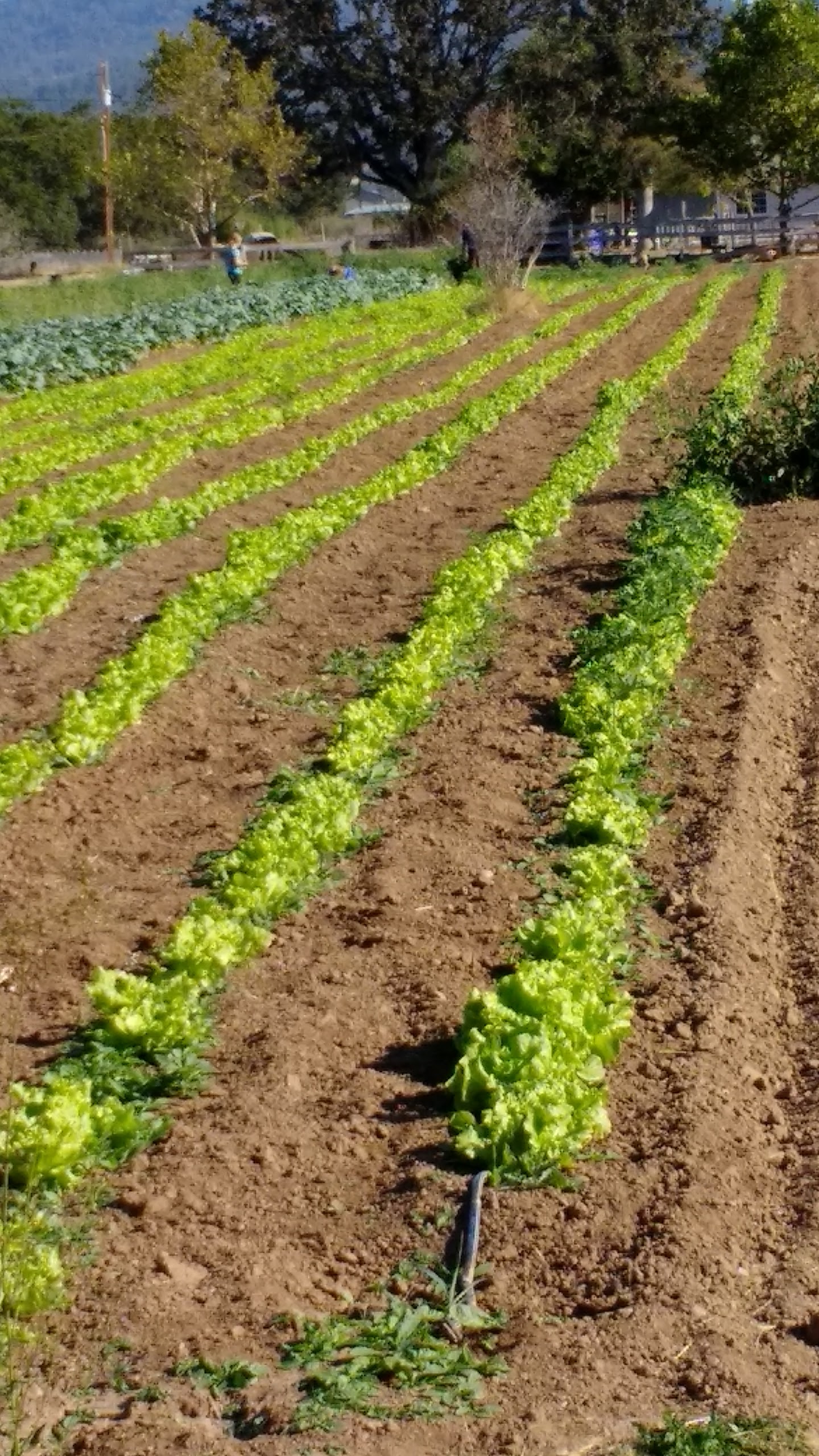
We will start harvesting the lettuce this week. It will probably bolt soon due to the high heat, but the plants are doing great right now. The plan on lettuce is not too continuous harvest, but rather pull whole plants to feed the animals. It's quicker and easier, and with the heat i doubt the plants will go for long anyway.

Nice color!